Water is one of the most essential resources for homes, commercial buildings, industries, and agricultural operations. To ensure a continuous water supply, an Overhead Water Storage Tank plays a crucial role. Installed at an elevated height, these tanks use gravity to distribute water efficiently throughout a building or facility. Whether it is a residential apartment, factory, school, hospital, or office complex, an overhead tank ensures that water is available whenever it is needed.
In this blog, we will discuss what an overhead water storage tank is, its uses, benefits, types, maintenance tips, and the proper cleaning process to help you maximize its performance and lifespan.
What is Overhead Tank?
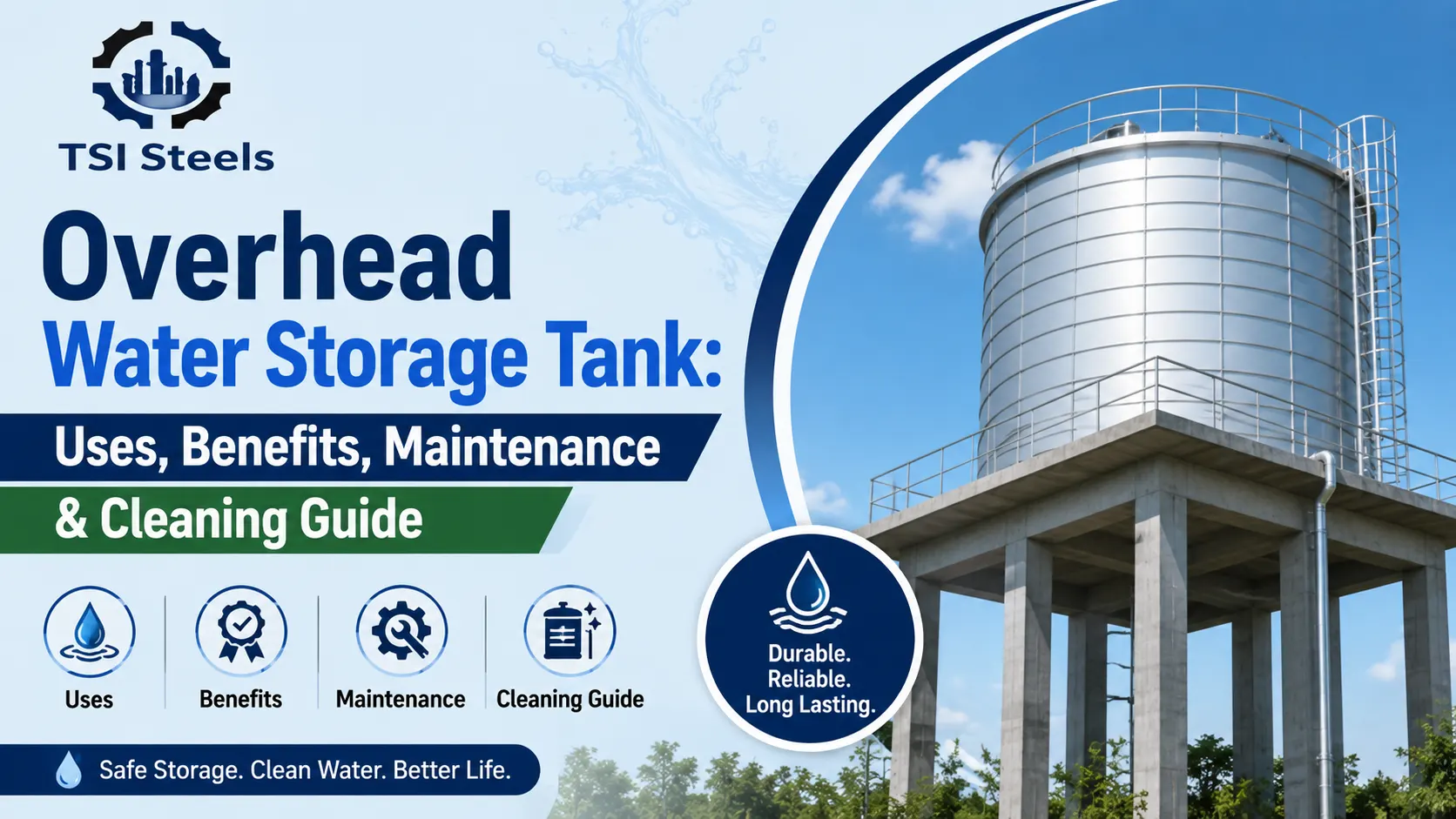
Over Head Tank is a water storage tank installed above ground level, usually on rooftops or specially designed elevated structures. Water is pumped into the tank and then supplied to different outlets through gravity, eliminating the need for continuous pumping.
These tanks are widely used because they provide a steady water supply even during power outages or interruptions in the municipal water supply. Overhead tanks are available in different materials, including RCC, plastic, stainless steel, and zinc aluminium-coated steel, depending on the application and storage capacity.
Why is an Over head Water Tank Important?
An overhead water tank is an essential part of any water distribution system because it stores water and maintains adequate pressure for daily use. Without an overhead tank, buildings would depend entirely on pumps for water distribution, increasing energy consumption and reducing reliability.
- Continuous water availability
- Consistent water pressure
- Reduced electricity consumption
- Emergency water storage
- Reliable water supply during pump failures
OHT Tank Full Form- Over Head Tank
OHT Tank Full Form is Overhead Tank.
OHT is designed to store water safely at an elevated position so it can flow naturally through pipelines to various parts of a building or industrial facility. OHTs are commonly used in residential societies, factories, hospitals, hotels, schools, and commercial complexes.
Why is an Over head Water Tank Important?
An overhead water tank is an essential part of any water distribution system because it stores water and maintains adequate pressure for daily use. Without an overhead tank, buildings would depend entirely on pumps for water distribution, increasing energy consumption and reducing reliability.
- Continuous water availability
- Consistent water pressure
- Reduced electricity consumption
- Emergency water storage
- Reliable water supply during pump failures
Types of Overhead Water Storage Tanks
1. RCC Overhead Water Tank
Reinforced Cement Concrete (RCC) tanks are commonly used for large public and municipal water storage projects. They are durable but require longer construction time and periodic maintenance.
Best For:
- Municipal projects
- Water treatment plants
- Large residential societies
2. Plastic Overhead Water Tank
Plastic tanks are lightweight, economical, and easy to install. They are commonly used in homes and small commercial buildings.
Advantages
- Affordable
- Corrosion-resistant
- Easy installation
- Low maintenance
3. Stainless Steel Overhead Tank
Stainless steel tanks provide excellent hygiene and durability. They are commonly used in food processing industries, pharmaceutical plants, and hospitals.
Advantages
- Rust resistant
- Hygienic storage
- Long lifespan
4. Zinc Aluminium Steel Water Tank
Modern industrial applications increasingly use Zinc Aluminium-coated steel tanks because they provide exceptional corrosion resistance, high structural strength, and a long service life.
These tanks are suitable for:
- Industrial water storage
- Fire water storage
- Commercial buildings
- Infrastructure projects
- Large residential complexes
Uses of Overhead Water Storage Tank
Residential Buildings
Overhead tanks supply water for drinking, cooking, bathing, washing, and cleaning in homes and apartments.
Commercial Buildings
Shopping malls, hotels, office complexes, and educational institutions use overhead tanks to ensure uninterrupted water availability.
Industrial Applications
Industries require a constant water supply for manufacturing processes, cooling systems, cleaning operations, and equipment maintenance.
Hospitals
Hospitals depend on overhead tanks to maintain a continuous supply of clean water for medical equipment, sanitation, patient care, and emergency services.
Agriculture
Farmhouses and agricultural fields use overhead tanks for irrigation systems and livestock water supply.
Fire Protection Systems
Many commercial and industrial buildings use dedicated overhead water tanks to supply water during fire emergencies.
Common Applications of Overhead Tanks
- Residential apartments
- Villas
- Commercial complexes
- Hotels
- Hospitals
- Educational institutions
- Industrial plants
- Warehouses
- Manufacturing facilities
- Food processing units
- Pharmaceutical industries
- Shopping malls
- Airports
- Railway stations
- Municipal water supply systems
Maintenance Tips for Overhead Water Storage Tank
Proper maintenance improves the lifespan of the tank and ensures safe water storage.
Inspect the Tank Regularly
Check for:
- Cracks
- Rust
- Leakage
- Loose fittings
- Structural damage
Keep the Tank Covered
A tightly fitted lid prevents:
- Dust
- Leaves
- Insects
- Birds
- Contaminants
from entering the tank.
Monitor Water Quality
Observe any changes in:
- Water color
- Taste
- Odor
- Sediment accumulation
If abnormalities are noticed, clean the tank immediately.
Check Pipe Connections
Inspect inlet, outlet, overflow, and drain pipes regularly to prevent leakage and maintain proper water flow.
Prevent Algae Growth
Avoid exposing the tank to excessive sunlight whenever possible, as sunlight encourages algae formation.
Overhead Water Tank Cleaning Guide
Regular cleaning is essential to maintain hygienic water storage.
Step 1: Drain the Tank: Completely empty the stored water before cleaning.
Step 2: Remove Sediment: Remove mud, sand, algae, and other deposits settled at the bottom.
Step 3: Scrub Interior Walls: Clean the internal walls using appropriate cleaning tools to remove dirt and biofilm.
Step 4: Wash Thoroughly: Rinse the tank several times with clean water.
Step 5: Disinfect the Tank: Use approved disinfectants to eliminate bacteria and harmful microorganisms.
Step 6: Final Rinse: After disinfection, rinse the tank thoroughly with clean water.
Step 7: Refill the Tank: Refill the tank with fresh water and ensure all covers are properly secured.
How Often Should an Overhead Water Tank Be Cleaned?
Experts recommend cleaning an overhead water tank every 3 to 6 months, depending on:
- Water source
- Usage frequency
- Water quality
- Environmental conditions
Regular inspection between cleaning cycles helps identify contamination early.
Why Choose TSI Steels for Overhead Water Storage Tanks?
TSI Steels is a trusted manufacturer providing high-quality Industrial water storage solutions for industrial, commercial, and infrastructure applications. The company focuses on manufacturing strong, durable, and corrosion-resistant tanks that provide reliable water storage performance.
Overhead Water Storage Tank is an essential component of an efficient water distribution system. It ensures uninterrupted water availability, maintains consistent water pressure, reduces energy consumption, and provides reliable storage for residential, commercial, industrial, and institutional applications.
With advanced manufacturing techniques and quality materials, we deliver overhead water tanks that are suitable for various applications requiring safe and efficient water storage.