Wastewater treatment is a crucial process in both industrial and municipal settings, helping protect water bodies, maintain environmental balance, and support regulatory compliance. Among the many components involved in treatment systems, the aeration tank holds one of the most significant roles. It is the “heart” of biological treatment, enabling microorganisms to break down pollutants effectively. Without a properly designed aeration tank, the entire treatment system can fail to deliver the required efficiency.
In this blog, we’ll explore what an aeration tank is, why it is so important, how it works, its key benefits, and why industries trust TSI Steels—one of the leading Industrial Aeration Tank Manufacturers—for reliable and durable aeration systems.
What Is an Aeration Tank?
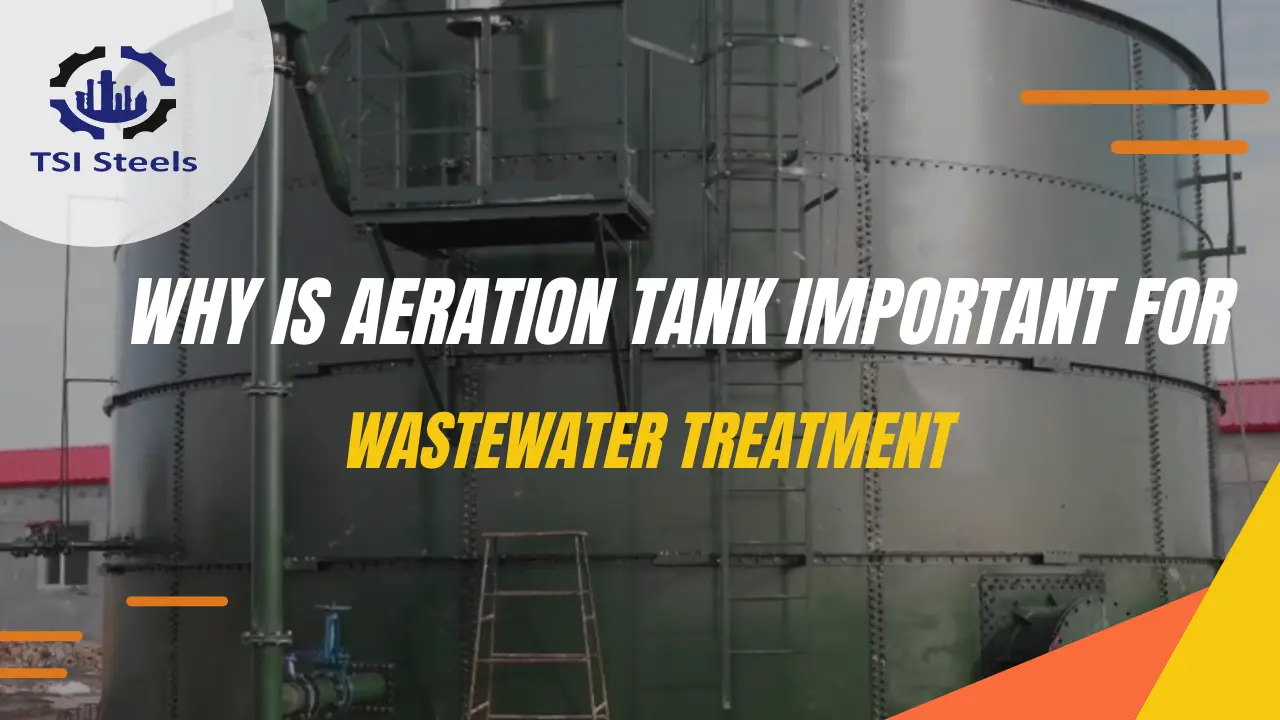
An aeration tank is a specially engineered vessel used in wastewater treatment plants where air is introduced into the wastewater to promote the growth of beneficial microorganisms. These microorganisms consume organic waste, toxins, and pollutants as food, breaking them down into simpler, harmless substances.
The process is typically part of the Activated Sludge Process (ASP)—one of the most widely used biological treatment methods worldwide.
Aeration tanks are designed to maintain optimum levels of oxygen, mixing, and retention time so that microbes can work efficiently in degrading the organic load.
Why Aeration Is Essential in Wastewater Treatment
The primary objective of wastewater treatment is to reduce organic load, harmful chemicals, and pathogens before releasing treated water into the environment or reusing it. Aeration is vital because:
- Microorganisms need oxygen to survive and digest organic matter
- Oxygen supports biochemical reactions
- Proper aeration prevents foul odor formation
- Aeration improves floc formation, allowing solids to settle easily in secondary clarifiers
Why Aeration Tank Is Important for Wastewater Treatment?
Below are the major reasons industries rely heavily on aeration tanks for effective and sustainable wastewater processing:
1. Supports Microbial Activity for Organic Waste Breakdown
The aeration tank ensures microorganisms receive the dissolved oxygen (DO) required to metabolize organic pollutants. The bacteria feed on the contaminants and convert them into carbon dioxide, water, and stable sludge.
This biological process results in:
- Reduced BOD (Biochemical Oxygen Demand)
- Lower COD (Chemical Oxygen Demand)
- Degradation of suspended and dissolved organic matter
A well-designed aeration tank ensures ideal oxygen levels, enabling maximum microbial activity.
2. Enhances Efficiency of the Activated Sludge Process
The aeration tank is central to the Activated Sludge Process, ensuring proper mixing of:
- Wastewater
- Microbial biomass
- Air or oxygen
Efficient mixing ensures equal distribution of oxygen and prevents sludge from settling prematurely. This boosts the treatment efficiency, allowing industries to meet regulatory standards with ease.
3. Helps Prevent Bad Odors and Septic Conditions
Wastewater that lacks oxygen becomes septic quickly, producing toxic gases like hydrogen sulfide and ammonia. This leads to:
- Foul odors
- Corrosion of system components
- Decreased microbial efficiency
- Unsafe working conditions
An aeration tank continuously supplies oxygen, preventing anaerobic decomposition and keeping odors under control.
4. Improves Sludge Quality and Settling Characteristics
Good aeration helps produce dense, well-formed flocs. These flocs settle easily in the secondary clarifier, ensuring clear and high-quality effluent.
Poor aeration often leads to:
- Bulking sludge
- Foaming issues
- Poor effluent quality
- Increased operational cost
Proper aeration tanks avoid these issues and maintain treatment stability.
5. Promotes Biological Nutrient Removal (BNR)
Modern wastewater treatment requires the removal of nitrogen and phosphorus. Aeration tanks help in nitrification, where ammonia is converted to nitrate by aerobic bacteria.
A well-managed aeration tank supports:
- Nitrifying bacteria growth
- Reduction of ammonia levels
- Stable nutrient removal process
This makes treated water safer for discharge into streams and rivers.
6. Ensures Compliance With Environmental Standards
Pollution control boards mandate strict limits for BOD, COD, TSS, and ammonia in industrial effluent discharge. Proper aeration ensures these parameters remain well within permissible limits.
Industries that depend on efficient aeration tanks include:
- Food & beverage
- Pharmaceuticals
- Textiles
- Chemicals
- Paper mills
- Dairy plants
- Leather tanneries
A reliable aeration system helps avoid penalties, operational shutdowns, and environmental damage.
7. Supports Energy Efficiency When Designed Properly
Aeration consumes nearly 50–60% of total energy in wastewater treatment. A well-designed tank helps optimize:
- Oxygen transfer
- Mixing efficiency
- Blower capacity
- Overall power consumption
This makes aeration tank design a critical aspect for lowering operational expenses over the long term.
How Aeration Tanks Work: The Complete
An aeration tank works using these core principles:
Step 1: Wastewater + Activated Sludge
Wastewater enters the aeration tank and mixes with microbial sludge.
Step 2: Oxygen Injection
Air is supplied using blowers, diffusers, or mechanical aerators.
Step 3: Microbial Decomposition
Microorganisms consume suspended organic matter.
Step 4: Floc Formation
Bacteria form flocs, making solids settle more effectively later.
Step 5: Flow to Secondary Clarifier
Effluent moves from the aeration tank to a clarifier for settling.
Step 6: Sludge Recirculation
Part of the sludge is returned to the aeration tank to maintain microorganism concentration.
Types of Aeration Systems Used in Aeration Tanks
1. Diffused Aeration Systems
- Fine or coarse bubble diffusers
- High oxygen transfer efficiency
- Low maintenance
2. Mechanical Aeration
- Surface aerators
- Useful for large tanks
- Offers strong mixing
3. Hybrid Aeration
- Combination of diffused and mechanical systems
- Ideal for high-strength industrial effluents
Choosing the right system depends on wastewater characteristics, tank size, oxygen demand, and project budget.
Why Industries Prefer Aeration Tanks Made by TSI Steels
TSI Steels is recognized as a leading industrial aeration tank manufacturer known for quality engineering and heavy-duty fabrication.industrial wastewater solutions. Our product quality standards produce robust, corrosion-resistant, and precisely engineered tanks. Our products are widely used in municipal utilities, industrial wastewater plants, and private treatment systems.
What Makes TSI Steels a Trusted Name?
- High-Strength Construction: Tanks are made from premium materials ensuring long operational life.
- Corrosion & Chemical Resistance: Engineered to withstand harsh industrial effluents.
- Precision Engineering: Designed for perfect oxygen distribution and microbial activity.
- Customized Tank Designs: Tailored for industry-specific flow rates, oxygen demand, and space availability.
- Support for All Aeration Technologies: TSI Steels provides tanks compatible with diffused, mechanical, and hybrid aeration systems.
With a strong reputation built on quality manufacturing and performance, TSI Steels continues to be the preferred partner for industries upgrading or expanding their wastewater treatment systems.
Conclusion
An aeration tank is an indispensable part of wastewater treatment, ensuring efficient biological degradation, odor control, nutrient removal, and compliance with environmental norms. Its role in supporting microbial activity and improving effluent quality makes it the heart of any biological treatment system.
For industries looking for durable, efficient, and technically optimized aeration tanks, TSI Steels stands out as a trusted and leading industrial aeration tank manufacturer offering robust, long-lasting solutions.